Artificial intelligence (AI) has moved beyond isolated tools toward becoming a foundational technology transforming organizational systems and decision-making. The shift from chatbots to agentic AI capable of autonomous action signals significant productivity and insight potential across enterprise functions, including HR.
According to a Gartner report, 33% of enterprise applications will integrate AI agents, and 15% of day-to-day decisions will be made autonomously by 2028. However, despite this momentum, AI adoption itself remains a major challenge. In fact, Normandin Beaudry’s 2025 Salary Increase Survey found that 85% of organizations are still in experimentation or pilot phases, with value that remain localized or not yet realized. More specifically, nearly 90% of organizations have not adopted AI in salary increase or compensation planning processes, underscoring how limited its use remains in these areas.
These statistics highlights a dual imperative: organizations must both successfully adopt AI while also rethinking how work is structured, how decisions are made, and how value is created within Total Rewards. Organizations should expect a transition phase where productivity gains are not immediate—early adoption often introduces additional complexity, temporary inefficiencies, and increased cognitive load before long-term value is realized.
The Major Challenges of AI Adoption in HR
Capability and Understanding Gaps
Limited technical and behavioural AI literacy continues to constrain productivity gains. Misunderstanding AI’s role can lead to inefficient deployment, mistrust, or over-automation risks. HR, in turn, must develop a combination of technical and human capabilities. Beyond data and AI fluency, the critical differentiator is human skill—enabled by learning agility, openness, perspective, and the ability to act as change agents. These competencies are critical to ensuring that AI is used effectively and responsibly.
Responsible AI
AI adoption raises critical concerns related to data protection, confidentiality, fairness and decision transparency. In this context, ‘responsible AI’ is essential to ensure ethical use, build trust, and reinforce organizational credibility. For HR functions, it means ensuring that AI-driven decisions are traceable, explainable, and aligned with organizational values. Responsible AI is not only a governance requirement, it’s a key differentiator in how organizations deploy AI in people-related decisions.
Source: Normandin Beaudry’s 2025 Salary Increase Survey
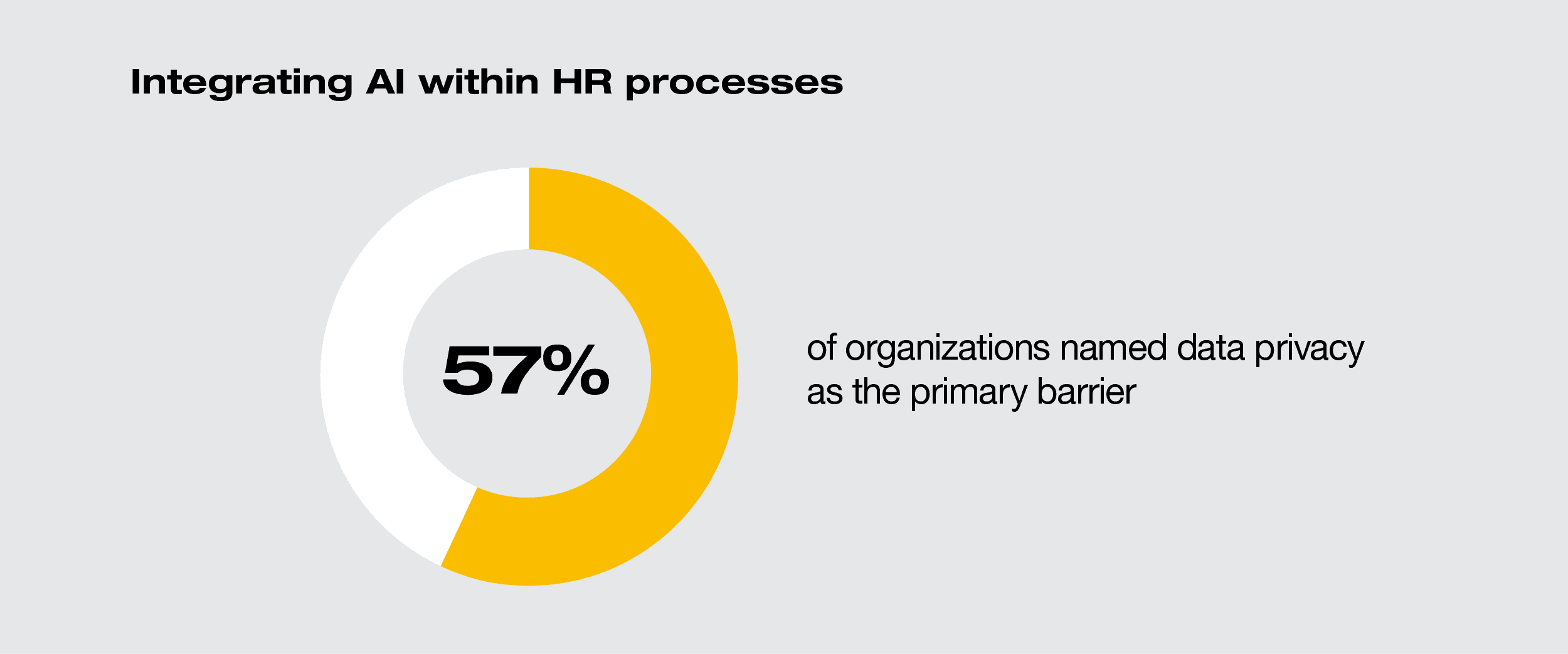
Normandin Beaudry’s 2025 Salary Increase Survey revealed that 57% of organizations named data privacy as the primary barrier to integrating AI within HR processes, underscoring the importance of robust data governance, secure infrastructures, and clear usage policies.
Process Maturity Before Automation
AI cannot compensate for inefficient or unclear HR processes. Organizations must simplify, standardize, and optimize workflows before embedding AI solutions. Successful adoption also depends on fostering trust, psychological safety and a strong learning culture, ensuring that AI becomes a strategic accelerator rather than a fragmented initiative.
Frequent organizational changes and the introduction of new technologies can also increase employee workload and contribute to change fatigue (now recognized as a growing factor in employee turnover) highlighting the need for thoughtful change management alongside AI deployment. In fact, Normandin Beaudry’s 2025 remun survey revealed that workload is considered the fourth most common reason employees leave a job, an increase from ninth position in 2023.
Journey of AI in Total Rewards
AI is rapidly reshaping the Total Rewards landscape, extending its impact across how programs are designed, delivered and administered. Its ability to standardize disparate datasets, process large volumes of information and translate complex inputs into structured, reliable insights is fundamentally changing how organizations operate. These capabilities are enabling more personalized communications, improving team productivity and strengthening the data foundations required for informed decision-making, including targeted cost management initiatives.
While questions remain around AI maturity and long-term risk, expectations from leadership and investors are clear. In a context of rising cost pressures, increasing governance requirements, and constrained resources, AI adoption is becoming less of a differentiator and more of a necessity. For HR leaders, the focus is no longer whether to adopt AI, but how to integrate it thoughtfully across each component of Total Rewards.
Design: Reinventing Benchmarking and Data Interpretation
AI is transforming how organizations can conduct benchmarking and analyze Total Rewards data. In the survey participation process, it accelerates job matching, data validation, survey participation and analytics, improving both speed and reliability.
Intelligent agents can generate recommendations, monitor market trends continuously and support scenario modeling. These features allow HR leaders to focus on strategic decision-making, internal equity and governance, while maintaining credibility through traceability and human oversight.
Delivery: Transforming Employee Health & Group Benefits
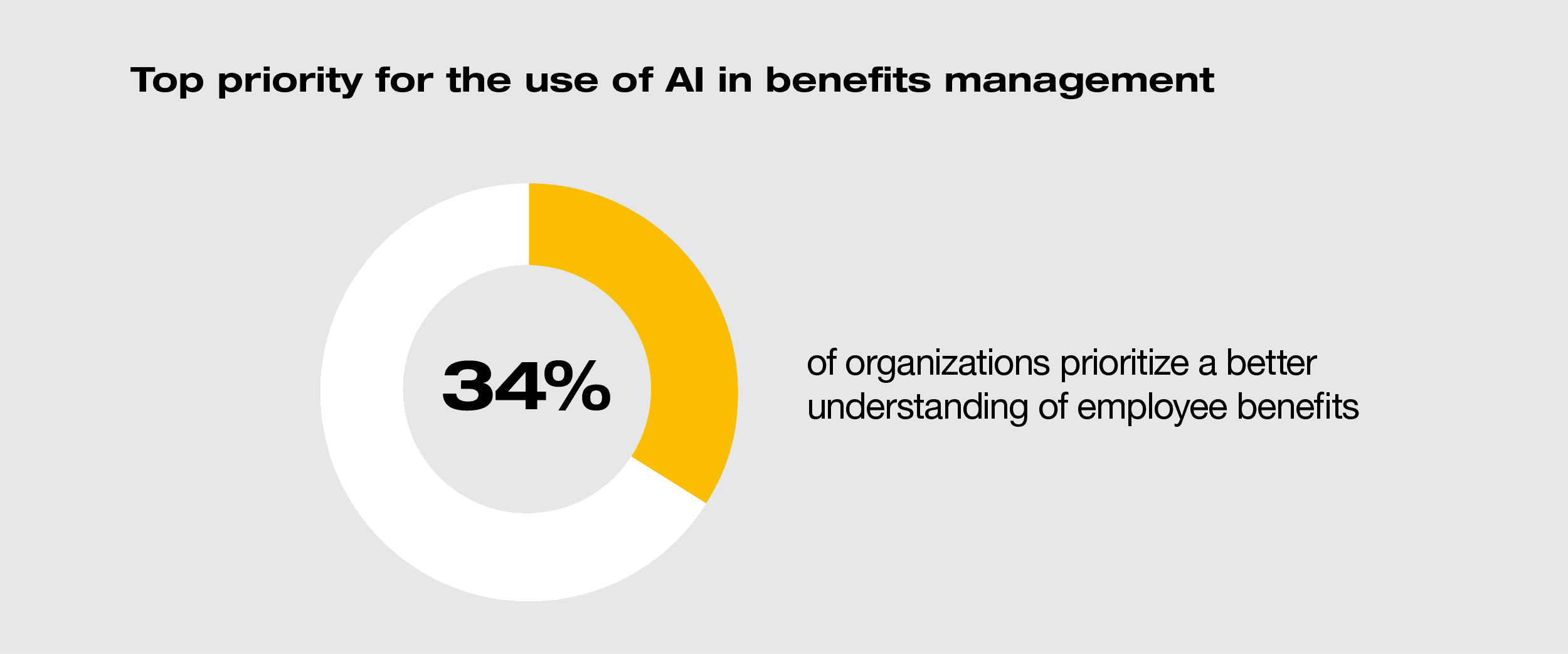
In benefits management, AI enhances precision, responsiveness and cost efficiency. It also enables faster insights for employers and more personalized experiences for employees, helping organizations better align communications with increasing employee expectations and more selective benefits strategies. According to the 2026 MBWL Global Benefits Survey, 34% of organizations identified improving employees’ understanding of their benefits as a top priority for the use of AI in benefits management. More broadly, these capabilities—automation, personalization, and improved decision-making—extend across all Total Rewards components, not only benefits.
Source: Normandin Beaudry’s 2025 Salary Increase Survey
Beyond analytics, AI is reshaping the delivery of wellness programs. Insurers and telemedicine providers are increasingly using AI to tailor communications and services based on individual health profiles and usage patterns. Telemedicine platforms for example, can automate steps such as pre-triage which has been traditionally handled by clinicians, to improve both efficiency and quality of care while enabling more personalized employee support.
Administration: Proactive and Personalized Pension Management
A more proactive and personalized approach to employee experience is emerging, including pension administration. Intelligent agents can identify key life moments and provide targeted guidance. From retirement projections and scenario comparisons to automated administrative processes, AI simplifies complex interactions into a more accessible and seamless experience.
The impact is an improved participant experience, reduced administrative burden, and broader accessibility—adapting communication and support to different needs, formats, and levels of understanding.
At the same time, reliability of calculations, access control and risk governance remain non-negotiable safeguards. Ensuring accuracy, traceability, and adherence to responsible AI is essential to maintaining trust and credibility in these processes.
Total Rewards in the AI Era
Emerging Roles and Skill Scarcity
The rise of AI is reshaping the workforce, with organizations increasingly seeking talent that combines business acumen, technological expertise, and AI-capabilities. At the same time, employee expectations are evolving toward continuous learning, meaningful work and recognition of digital capabilities.
Rethinking Total Rewards
To compete for AI and data-driven talent, organizations are moving beyond traditional salary strategies and rethinking the broader Total Rewards proposition. While competitive pay remains important, leading industries such as high technology, finance and insurance, and professional services are increasingly combining compensation with enhanced benefits, flexible work arrangements and targeted incentives designed to support employee well-being and engagement. Recent data points illustrate how this broader Total Rewards approach is being applied in practice; according to Normandin Beaudry’s 2025 AI Survey, nearly 80% of organizations offer an on call premium for AI-related roles, compared with about 50% of organizations in the general market.
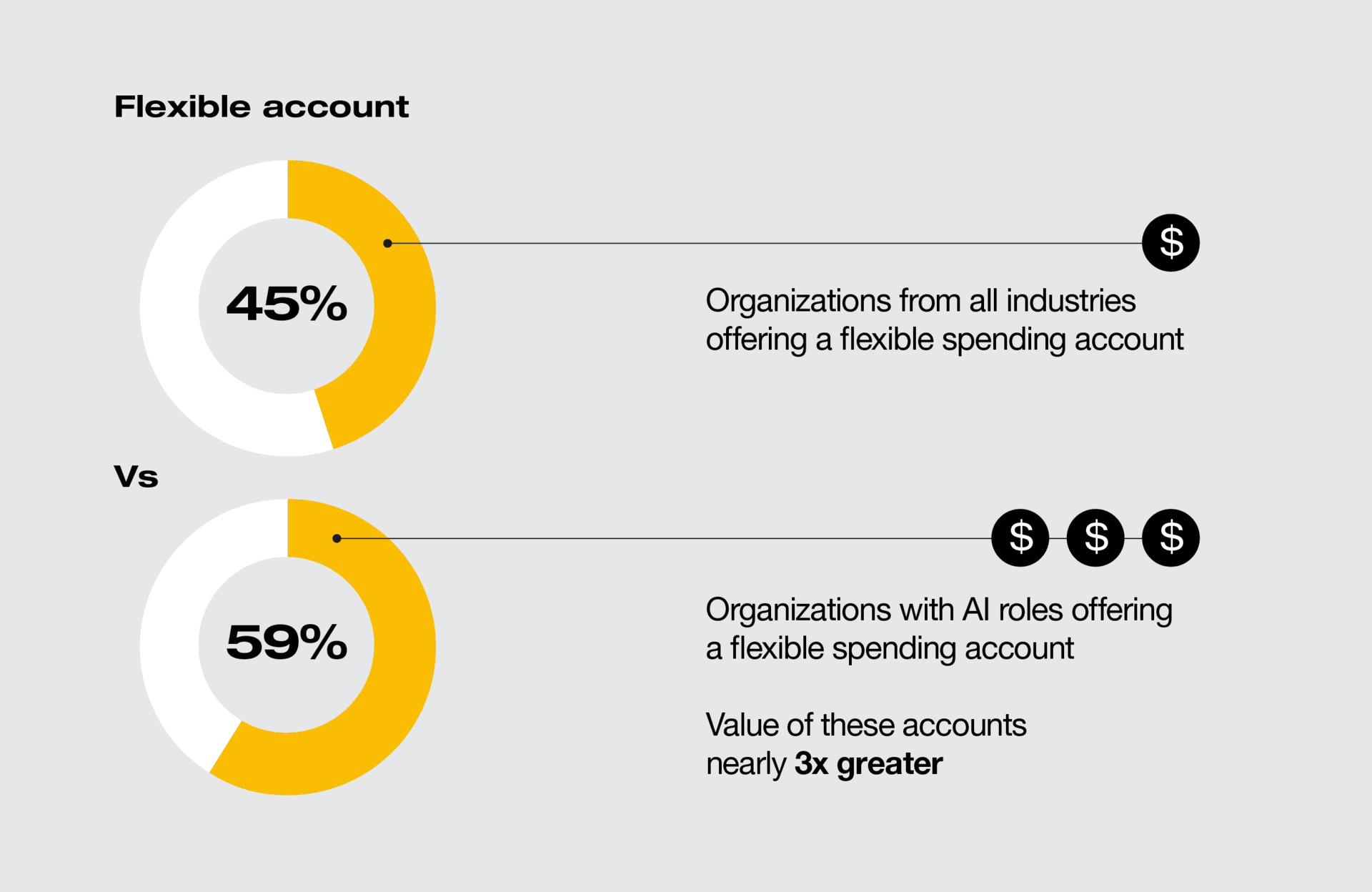
Organizations with AI roles are also placing greater emphasis on flexible benefits, with 59% offering a flexible spending account, versus approximately 45% across the broader workforce. For organizations operating specifically in the AI sector, the value of these accounts is nearly three times greater than in the general market.
Source: Normandin Beaudry’s 2025 AI Survey
Together, these kinds of trends suggest that attracting AI talent requires a more holistic approach to Total Rewards. Organizations that integrate competitive compensation with strong benefits, flexible working conditions and meaningful engagement initiatives are better positioned to differentiate themselves in an increasingly competitive talent market.
Demonstrating Return on AI Investments
Organizations are under increasing pressure to demonstrate measurable return on AI investments, both technological and human. Here HR plays a key role in linking AI initiatives to productivity, performance, well–being and workforce experience outcomes, ensuring that investments translate into tangible business value.
Key Takeaways for HR and Total Rewards Leaders
AI Value Requires Both Adoption and Work Redesign
AI delivers value only when organizations successfully adopt the technology while rethinking processes, governance, and decision-making. Without the right foundations, a significant portion of potential value can be lost.
Humans Remain the Primary Performance Lever
The real differentiator is not AI itself, but how people can strategically and responsibly use it. Recognizing these capabilities, both financially and non-financially, must be embedded in Total Rewards strategies.
Treating AI as Continuous Organizational Change
AI adoption should be approached as an ongoing transformation rather than a one-time project. Organizations should measure success beyond tool usage, including employee sentiment, collaboration, innovation, and learning assimilation. Continuous feedback and adaptation are essential to sustaining long-term impact.
AI’s true contribution to Total Rewards is not automation alone, but its ability to transform how organizations adopt technology, empower people, and create sustainable workforce value through responsible AI.
Darcy Clark,
Senior Principal, Compensation, talent and culture at Normandin Beaudry
Simon Levy
Senior Principal, Innovation and software solutions at Normandin Beaudry
Much more than a salary survey, remun is a total rewards survey conducted across Canada and is now in its 15th year. Our expertise gives you access to current, reliable and detailed data.