
Normandin Beaudry Pension Plan Financial Position Index, September 30, 2026
Normandin Beaudry has updated its pension plan financial position index as at September 30, 2026, tracking defined benefit pension plans in Canada.
Explore the 2027 Salary Increase Survey results | Explore them here.
Voir+
Normandin Beaudry has updated its pension plan financial position index as at September 30, 2026, tracking defined benefit pension plans in Canada. The information below highlights the segment specific to the Quebec municipal and university sector. Click the following link for our Canadian index, which excludes this sector.
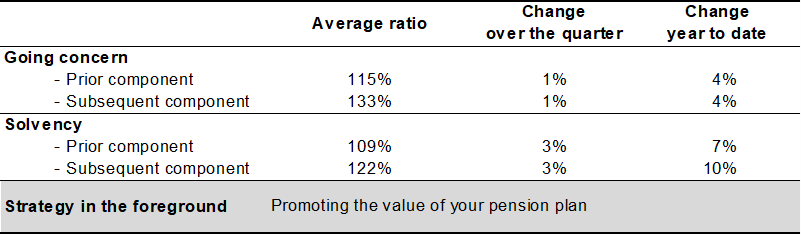
Note: The components are distinguished by years of service accumulated before and after January 1, 2014, for the municipal sector and January 1, 2016, for the university sector.
Our index tracks both funding valuation bases:
The average pension plan’s financial position improved during the third quarter of 2026. While the return on assets was slightly lower than expected, the estimated value of actuarial liabilities went down due to an increase in long-term interest rates. Higher long-term interest rates also lower current service costs.
On September 21, 2026, the Canadian Institute of Actuaries (CIA) published its final communication stating that the new CPM2024 mortality table and the new CanMi-2024 mortality improvement scale must be used to calculate transfer values as of April 1, 2027. As a result, the expected 2% to 3% deterioration in the average financial position will only be reflected in the solvency results as of that date but may be reflected earlier in the going concern and accounting results.
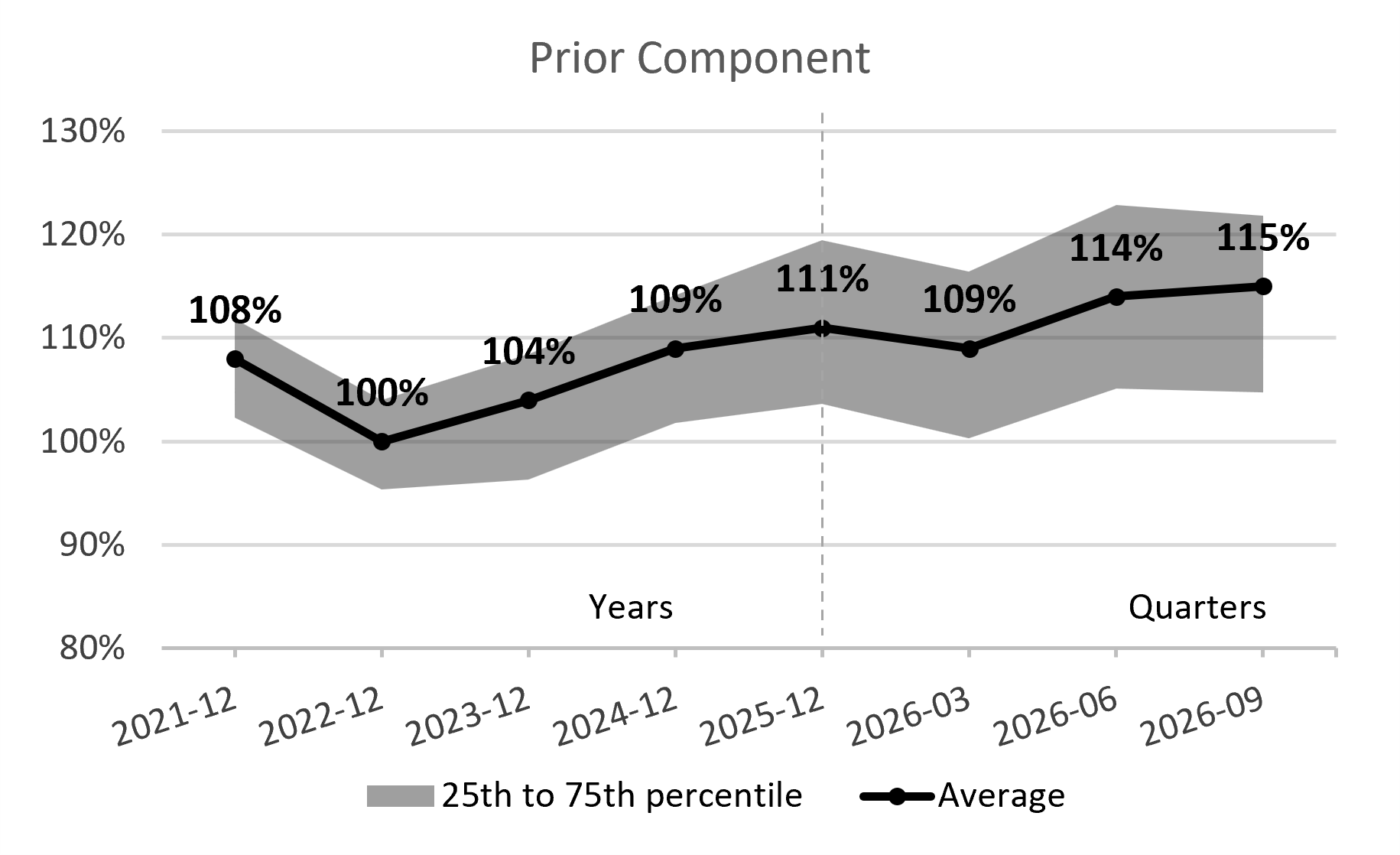
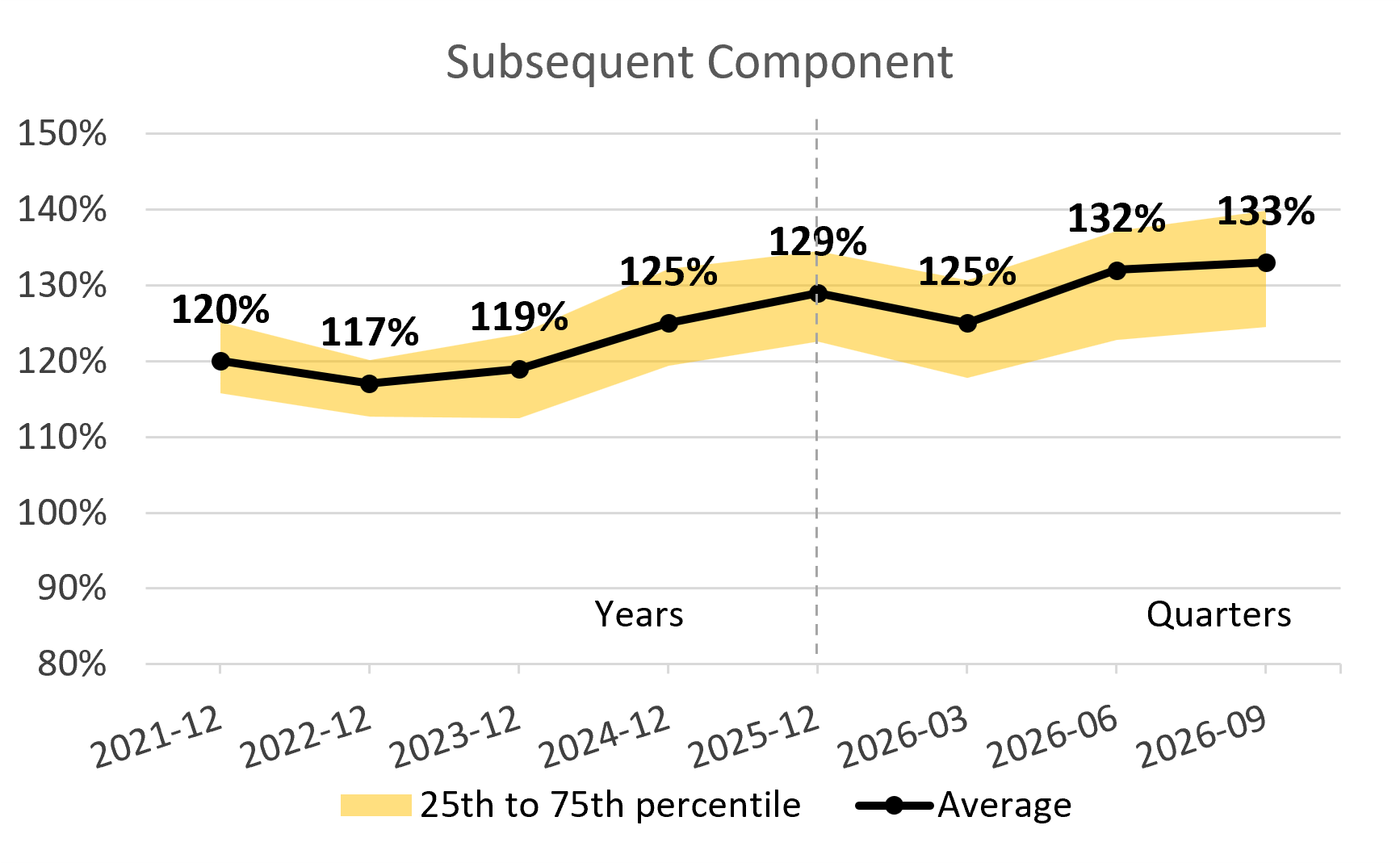
Note: The illustrated going concern financial positions are adjusted to include the full market value of assets. They therefore include the reserve in the prior component and the stabilization fund in the subsequent component, and exclude the effect of asset smoothing.
In Q3 2026, financial markets were influenced by emerging inflation, which directly impacts the cost of consumption, as well as by rising interest rates, which increase the cost of financing investments. The conflict in the Middle East exacerbated inflation, particularly through its impact on energy prices. An additional factor is the surge in debt issuance from major technology companies to finance their artificial intelligence infrastructure projects and data centres, which also exerted upward pressure on interest rates.
In the United States, the interplay between monetary policy and fiscal policy remains complex. On September 16, 2026, the U.S. Federal Reserve raised its benchmark rate by 0.25% to curb a resurgence of inflationary pressures. Meanwhile, the U.S. Treasury increased its longer-term bond purchases to improve liquidity and rein in rising long-term borrowing costs. However, some observers are of the opinion that the U.S. Treasury’s intervention may only have a limited effect on long-term interest rates, while complicating efforts to control inflation. Financial markets also remain concerned about the high level of public debt and rising debt servicing costs, which is limiting public authorities’ margin of manoeuvre. The impact of the U.S. midterm elections on financial markets will also be closely scrutinized.
Despite their potential repercussions on the economy, interest rate hikes have generally improved the financial position of pension plans by lowering the estimated value of actuarial liabilities.
Amid the risks associated with tariff negotiations with the U.S., the Canadian equity market held up relatively well. In this context, the announcement of significant federal investments in energy projects was well received. Furthermore, the technology sector, which is focused on software, recouped most of the losses it had suffered earlier in the year.
Earlier this century, deficit amortization for defined benefit (DB) plans placed a significant burden on many organizations and prompted those in some sectors to switch to savings plans. Given the current surplus context, DB plans are now offering a financial advantage to plan sponsors, as surpluses are enabling numerous organizations to reduce their pension expense.
Beyond their financial benefits, organizations that maintained their DB plan have an excellent opportunity to promote its distinct value. Indeed, DB plans can be a powerful tool for attracting and retaining talent. The predictable income and long-term security they offer to employees are a unique advantage. But for a DB plan to be fully appreciated, employees must understand its true value. The current context is providing an ideal opportunity to launch communication tools that help employees better understand and appreciate this component of their total rewards.
How? With simple tools that, instead of explaining the technical details, present a general overview and highlight the main advantages of a DB plan. Examples include an animated video capsule, a one-page promotional document, a short training session, a quiz in a newsletter, etc. Depending on your organizational context and the profile of your members, several options for communication tools are available to you.
Do your employees appreciate the full value of their pension plan? Contact your Normandin Beaudry consultant or email us to find out how to integrate your DB plan into your strategy to attract and retain talent.
The Normandin Beaudry Pension Plan Financial Position Index is calculated by projecting the pension plan financial data of its clients in the Quebec municipal and university sector. A separate index is published for the plans of Canadian clients outside of this sector. Assets are projected based on the performance of market indices. Liabilities projected on a going concern basis use an estimated discount rate based on each plan’s asset allocation and the sensitivity of asset classes to changes in interest rates on Government of Canada bonds. The rates for transfer values used on a solvency basis are those prescribed by the Canadian Institute of Actuaries and are therefore based on the previous month’s market interest rates.